Water Heater Installation in Dyer, NV
Tell us about the house, and a licensed contractor who covers Esmeralda County will get in touch.
Tell us about the job
It takes about a minute.

Dyer winters put real demand on a new water heater
Winter nights here average 24°F from December through February, and incoming water is cold enough that a tank has to work to bring it up to temperature. Homes in Esmeralda County need heat from October through May, eight months of the year, so a water heater is doing that work most of the year.
Power is worth planning around too. Statewide, 13% of Nevada households went at least 24 hours without power in 2024, and the county has logged 8 winter storms and 52 damaging wind events over the past ten years. A storage tank with a standing pilot keeps making hot water through an outage. One with electronic ignition comes back on by itself once power returns. Whatever size tank you choose, it has to meet the federal minimum efficiency set for that size, which is figured separately for each tank volume and draw pattern rather than as one number across the board.
- 24°F
- the average winter night, and colder incoming water means longer heating
- 8 months
- October through May, the months homes here need heat
- 13%
- of Nevada households lost power for a day or more in 2024, and a heater with an electric element or electric ignition stops without it
NOAA nClimDiv, 1991–2020 normals
- How do I know it's time to replace my water heater?
- Look at the tank first. Rust colored water, a puddle at the base, or moisture around the fittings all point to a tank that is failing from the inside, and none of that gets better on its own. If it is taking longer to heat a full tank, or you are calling for repairs more than once a year, replacing it now costs less trouble than waiting for it to fail outright. A tank that fails usually does it without warning, and with winter nights here averaging 24°F, a flooded utility closet or a cold shower is not something you want to plan around.
- Should I switch to a tankless water heater?
- It depends on what your household needs, not on whether one type is better everywhere. A tankless unit heats water only when you call for it, so it does not run out partway through a shower and it is not holding a tank of hot water all day when nobody is using it. What it will not do is supply hot water to several fixtures running at once past its rated flow. If your household often runs a shower and a washing machine at the same time, weigh that against the tankless unit's limits before deciding.
- What changes when you install a tankless water heater?
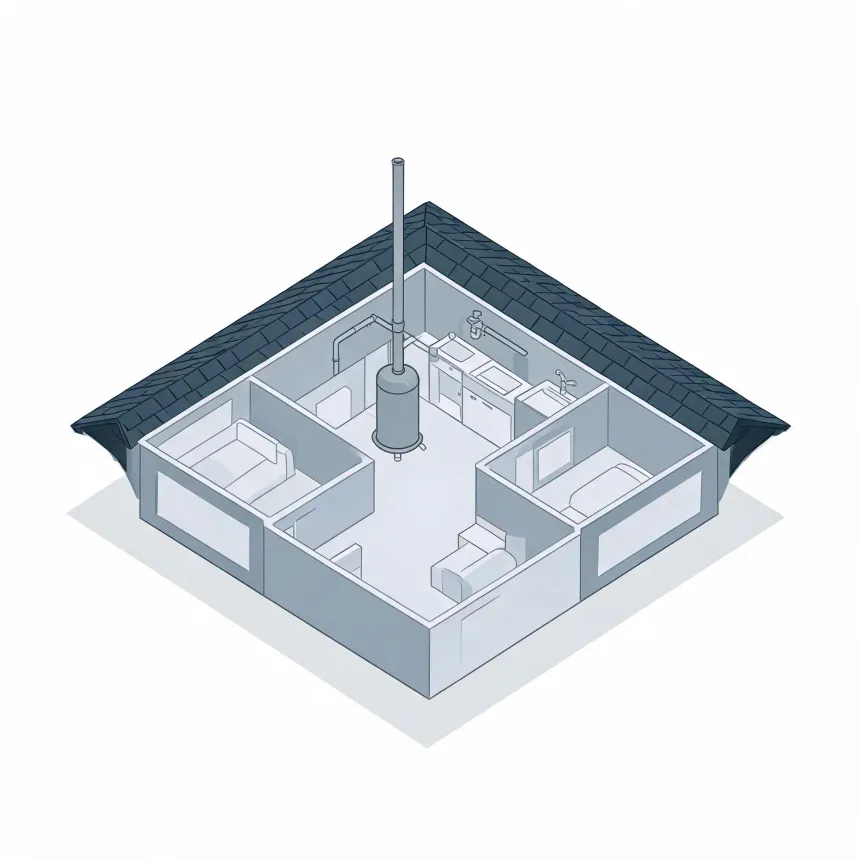
- The gas line and venting both need to match what the tankless unit requires, and that is usually different from what a storage tank used. A line sized for a tank heater often cannot supply a tankless unit at full output, so a contractor checks its capacity before installing one. Venting changes too, since tankless units vent differently than a tank does. A contractor looking at the actual gas line and venting in the house is the only way to know what work the switch involves.