 Hand it off
What to do when the AC goes out in Nevada
Once you send the form, finding a pro is off your list.
The AC quits in July and the house starts heating up fast. Nevada air is dry, so the house doesn't feel swampy, but the temperature climbs quick with nothing pushing cool air through the vents. This isn't a wait-and-see problem.
Most homes here run on power that's cheap, so people run their AC hard, and that system works for it all summer long. When it stops, you need someone who can get to it, not someone to add to a list.
The usual way this goes is you start searching. You call one company, explain what the unit is doing, get put on hold or told to wait two days. You call another, explain it again. You try to figure out if the outfit that picks up actually works on your kind of system, or if they're going to show up and tell you they need to order a part. Each call costs you time you don't have while the house keeps heating up.
Sending the form here skips that part. You're not the one calling around anymore, not the one repeating yourself to three different people, not the one guessing which company is legit. That work moves off your plate once you send it. A contractor who works on AC systems in Nevada gets your information and takes it from there.
You still need a real diagnosis. Whether it's the compressor, a refrigerant leak, a failed capacitor, something electrical, someone has to look at the unit and tell you straight what's wrong and what it takes to fix it. That part doesn't change. What changes is you're not the one tracking down who's going to do that looking.
Fill out the form below. The search part of this stops being yours.
What do I do when my AC goes out in Nevada?
It's July in Nevada and the AC just stopped. The house is dry, not swampy, but the heat climbs fast once the vents go quiet, and you want to know what to do before it turns into a bigger problem.
Shut off the system and call a repair tech
If the air stops coming out, turn the thermostat off rather than let the system keep trying to run. A unit that cycles on and off while something's wrong can damage the compressor, and that turns a repair into a replacement. In Nevada's dry heat, a house can climb past 85 degrees within a few hours once the air stops moving, so this isn't something to put off a few days to see if it resolves itself. Check the breaker first since that's sometimes the whole problem. If it's not the breaker, the system needs a tech to look at the refrigerant charge, the capacitor, or the outdoor unit before you run it again.


How your AC actually fails
- The thermostat calls for cool, the outdoor unit's contactor closes, and the compressor and condenser fan should start within a second or two.
- Low refrigerant from a slow leak often shows up first as warm air at the vents even though the fan still runs.
- A capacitor that's gone weak can make the outdoor fan hum and stall instead of spinning, so the compressor overheats and shuts itself off.
- Nevada's dry heat means condenser coils clog with fine dust rather than algae, and a caked coil can't shed heat, which trips the system on high pressure.
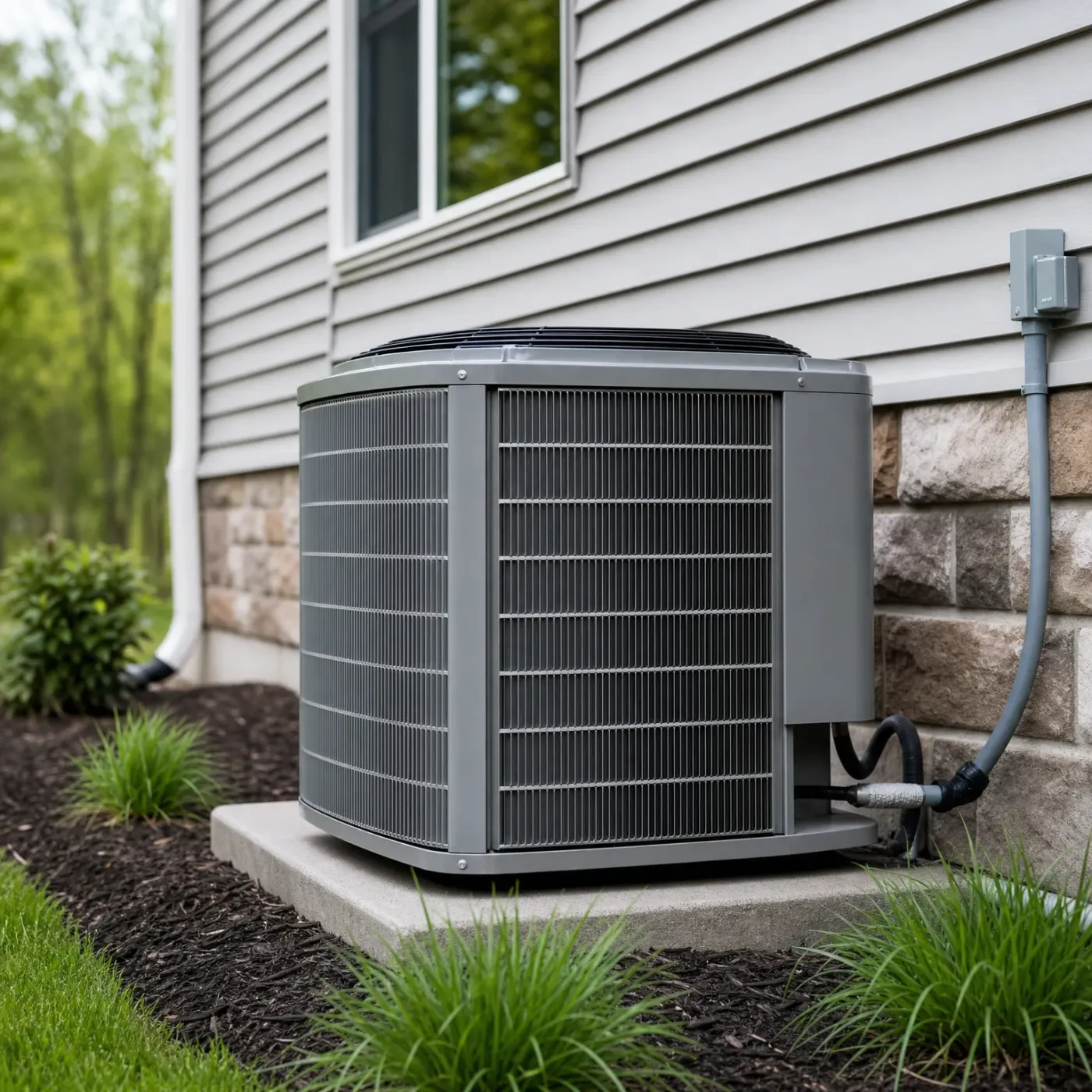
- The outdoor disconnect box near the condenser is a common point where a blown fuse or a tripped breaker cuts power to just that unit.
- Indoors, a float switch on the drain line will shut the whole system down the moment it senses water backing up, even if everything else is fine.
A central air system is simple once you know the order it runs in. The thermostat sends a signal outside, a contactor closes, and that's what starts the compressor and the condenser fan together. If either one doesn't start, nothing downstream works, no matter what the indoor blower is doing.
Most of what goes wrong traces back to one of three places. The compressor itself, the airflow across the outdoor coil, or a safety switch doing its job. A weak capacitor won't always kill the fan outright. Sometimes it just hums and stalls, and that's enough to let the compressor overheat and shut down on its own protection. Nevada's heat doesn't help, since a condenser coil caked in fine dust can't shed heat the way it needs to, and the system trips itself on high pressure before anything actually breaks.
Not every outage is the compressor's fault. The outdoor disconnect box sitting next to the condenser carries its own fuse or breaker, separate from the house panel, and that alone can cut power to the unit while everything else in the house runs fine. Indoors, a float switch on the condensate line will stop the whole system the second it senses standing water, even with a perfectly good compressor and a full charge of refrigerant. Knowing which of these it is isn't guesswork. It's a matter of checking them in order.


Hand off the air conditioner problem
Answer a few questions instead of calling shop after shop.
After you send the request, you're done searching.
Sending the form costs nothing.
Call now or check it yourself first
Call now
- A unit blowing warm air in a Nevada July can let a house climb into the 90s within a couple of hours.
- A refrigerant leak or a failed capacitor rarely fixes itself, and running the system in that state can push a compressor into failure.
- A contractor can often tell over the phone whether the problem is something dangerous, like a burning smell or breaker that won't reset.
- Waiting a day to see if it resolves on its own usually just means a hotter house and the same repair needed anyway.
- If anyone in the house is especially sensitive to heat, getting a contractor out the same day matters more than the cost of the call.
Try this first
- Check that the thermostat is set to cool and the temperature is actually below room temperature, since a bumped setting is an easy fix.
- Look at the breaker panel for the outdoor unit and the air handler, since a tripped breaker will stop the whole system cold.
- Check the air filter, since one packed with dust can choke airflow enough that the system shuts itself down to protect the coil.
- If the outdoor unit is silent, listen for the indoor blower, since a dead outdoor unit with a running blower points to a different problem than a dead blower.
- If the system responds to these checks, it still may be worth a look from a contractor to catch whatever caused it before it happens again.
Thermostat calls for cool and sends power to the control board.
Control board energizes the contactor in the outdoor unit.
Contactor closes and sends power to the compressor and condenser fan.
Compressor pressurizes refrigerant and sends it to the condenser coil.




Is your house heating up faster than it should?
You'll notice it in the rooms farthest from the thermostat first, warm pockets even with the system running, or the vents going quiet altogether. The air might smell a little dusty or faintly burnt near the unit outside. If the outdoor unit is humming but not spinning, or clicking and shutting off on its own, that's the contactor or capacitor giving out. In a Nevada July, a dark house doesn't stay comfortable long once the system stops pushing air, and a compressor that keeps trying to start against a bad part can fail completely instead of just needing a repair.

Nevada air holds little moisture even in July, and the National Weather Service puts the summer dew point here at an average of 37°F. That dryness is why your AC's job is lighter than it would be in a humid state. The compressor doesn't have to work as hard pulling water out of the air, just dropping the temperature. But that also means a struggling unit shows itself fast. There's no mugginess to mask the problem. If the compressor's weak or the refrigerant's low, you'll feel it as plain heat creeping through the house, not as stale, heavy air.
NASA POWER T2MDEW county cells weighted by homes

What an afternoon without AC does to your house
Close the blinds and the house still gains heat through the walls and roof all afternoon. In a Nevada summer with no cool air moving, rooms on the west side climb fastest, and anything in the attic or garage, paint, candles, a bottle of medication, is sitting in worse heat than the thermostat reading. Pets and anyone older or on medication feel it before a thermostat does.
The part you don't have to do yourself is the search. Instead of scrolling through contractor listings, calling two or three to ask if they even work on your brand, and repeating the same story about warm vents and a quiet outdoor unit to each one, you send the details once. From there, lining up someone qualified is off your plate, and you can put your attention on the house instead of the phone.


By two in the afternoon you've given up fighting it and pulled the blinds shut. The couch sits in dim light, striped where sun still finds a gap in the slats. The floor fan next to it pushes the warm air around rather than cooling anything, and you've angled it straight at your knees because that's the only relief going. The vents are quiet. No hum from the hallway, no cold air finding your ankles like it should by now. You keep checking the thermostat number against the one you set, watching the gap between them get wider. Outside the window the light is flat and white, the kind of July glare that makes the drawn blinds feel less like comfort and more like a wall against something that's already inside.


Power costs 13.26 cents per kilowatt-hour statewide
At 13.26 cents per kilowatt-hour, running your AC hard while it struggles isn't what drives your bill up. A failing capacitor or a low charge makes the compressor pull harder for the same cooling, and that's where the extra cost comes from. Fixing it stops that waste.
EIA-861 2025 statewide residential average
When your AC quits in a Nevada summer, the heat moves faster than the fix does, so the first hour matters. Shut it down, check the breaker and the filter, and if the problem is still there, it needs a contractor, not another day of running a unit that's struggling. You could spend that time calling around, explaining the same problem to three different shops, and comparing quotes while the house keeps climbing into the 90s. Send the form instead and that search becomes someone else's job, not yours. The unit itself still has to be looked at, parts still have to be found and fixed, and that part of it takes the time it takes. But you stop doing the legwork of finding who can get there, and that's the part that was never going to make your house cooler anyway. A dry Nevada summer gives you a little room to think it through, but not much. Act on it today.

Send one request and you're done looking
Describe your air conditioner job once, to one pro.