Gas heat, most homes
Most furnaces in Nevada run on gas, so a pilot light or igniter that won't catch is usually the first place a contractor checks.

First, check the thermostat is set to heat and the temperature is above room temperature, then check the breaker for the furnace hasn't tripped. If it's gas, see whether the pilot light or igniter is working, since a furnace that won't light is often just a safety switch doing its job after a draft or a dirty flame sensor. Most homes in Nevada heat with gas, so a no-heat call is usually about ignition or airflow, not the whole system failing. Check the air filter too. A clogged one can cause the furnace to shut itself off. If the blower runs but no warm air comes out, or the unit won't start at all, it needs a technician. None of this is dangerous to check yourself, but once it's past the thermostat and the breaker, it's a repair job, and the fix matters more than figuring out why it happened.




Most furnaces in Nevada run on gas, so a pilot light or igniter that won't catch is usually the first place a contractor checks.
Electricity here is cheap, but a tripped breaker still cuts off the furnace entirely. Resetting it costs nothing and rules out one cause fast.
You've checked the thermostat and the breaker, so now you're down to the igniter itself. The burners won't catch, and you want to know what's actually stopping them, not just a guess.
Most gas furnaces now use a hot surface igniter instead of a standing pilot. It's a small ceramic element that glows to light the burners each time the furnace calls for heat. That element is thin and it cracks with age, or it picks up a film of dust and soot that keeps it from reaching full heat. Either way, the burners don't catch. A contractor checks it by pulling the igniter and looking for a visible crack, then testing it with a multimeter to see if it's still carrying current. If it's cracked or reading open, it gets replaced. If it's just dirty, cleaning it can be enough to get the furnace lighting again.



It's just past six and already dark outside. You're down in the basement because the house felt off all through dinner, and now you know why. The furnace sits there dead, no hum, no blower, nothing. You put your hand near the vent and feel nothing coming through. A thin layer of dust hangs in the air where you knocked against the cabinet checking the pilot. Upstairs the thermostat still reads the temperature you set an hour ago, lower than it should be by now. Outside it's a cold November night, the kind Nevada gets once the sun drops, and the cold is already working its way into the rooms upstairs.
Fill out one short form instead of calling around.
Asking costs nothing, and the choice to hire stays yours.

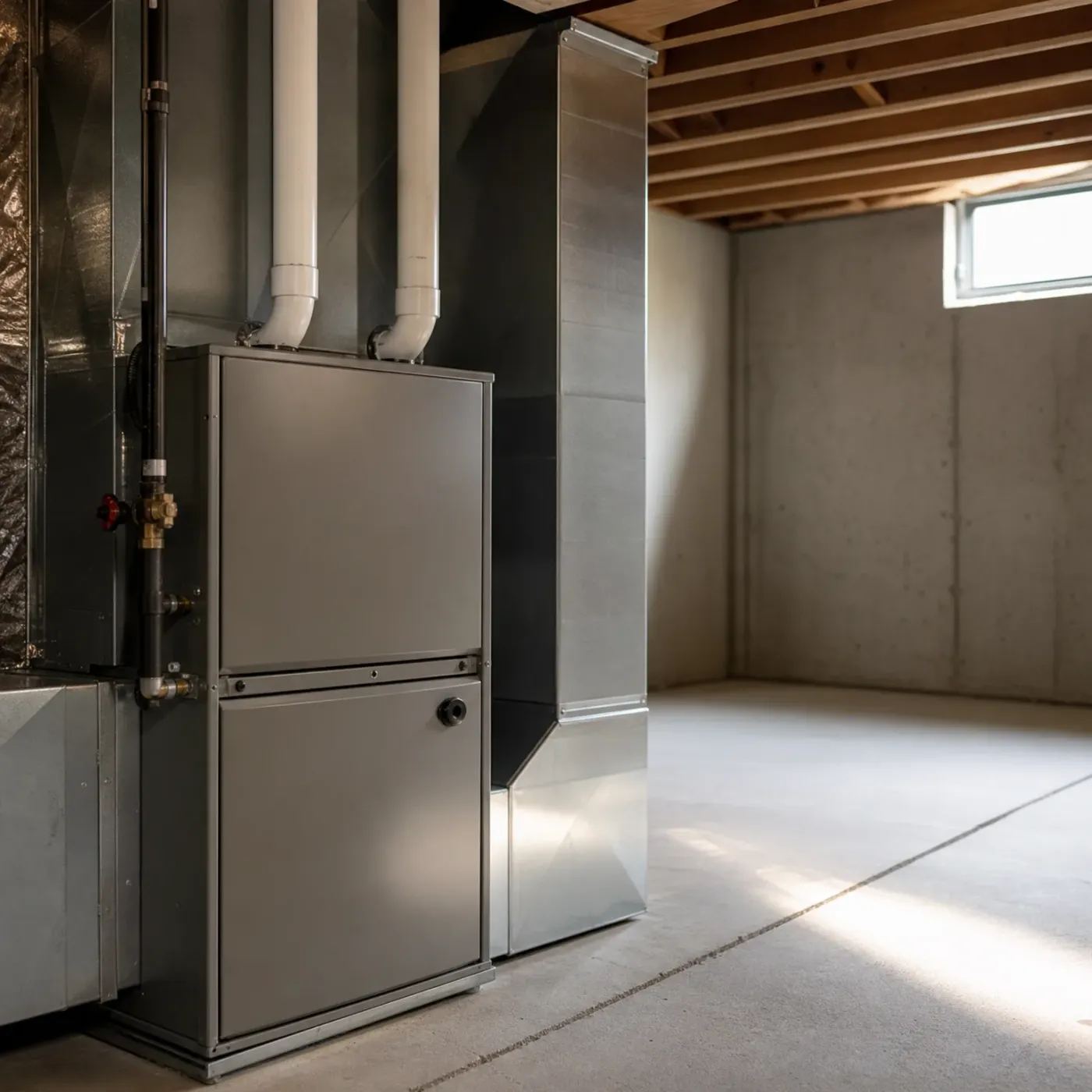
A furnace in good shape sits clean on its pad, the ductwork tight, the gas lines and exhaust pipe secure. It fires on the first call for heat and runs quiet. Nothing to check twice.

An older furnace like this one keeps going longer than it should before anyone looks at it. Flexible conduit standing in for proper venting, a drain pipe routed around the cabinet, these are the kind of fixes that outlast their welcome and leave you guessing at what else is wrong inside.
Thermostat calls for heat and sends power to the control board.
Control board checks the limit switch and inducer motor first.
Inducer motor clears the burner chamber before ignition starts.
Igniter heats up or the pilot lights the burners.
33°F is the average overnight low here once December, January and February are counted together, so plenty of nights drop colder than that. A furnace that's barely keeping up on an average night will fall further behind once temperatures dip below it.
NOAA nClimDiv 1991-2020 county normals weighted by homes

This is what a furnace looks like doing its job. The burners light on the first call, the inducer clears the chamber, and heat moves through the ductwork without the cabinet working hard to push it. Nothing rattles, nothing smells off, nothing to check twice this week.

This cabinet has seen a lot of winters. The flue pipe shows its age, and a furnace this worn can still run, but it's working harder to do it. Once the burners hesitate or the cycle runs long, it's telling you something a quick look won't fix.


You've gone through it in order: thermostat, breaker, igniter. By now you have a sense of whether this is something small or something that needs a trained eye. A furnace that cycles off on its own is protecting itself, not failing randomly, and that distinction matters for whatever happens next. Rust on the cabinet, a furnace that's run for many winters already, short-cycling that keeps happening even after you've checked the obvious things, these point toward a system nearing the end of its working life rather than a quick fix. None of that changes with cheap electricity. A tripped breaker still leaves a gas furnace cold no matter what the power costs, and overnight lows in the 30s mean every hour without heat is an hour the house keeps losing ground.
What you're left with is a question that's hard to answer from the basement with a flashlight: is this gas or electrical, a part that failed or a system that's done. That takes someone who can test both sides properly, not another round of guessing. Finding that person usually means searching, calling a few places, explaining the same problem over and over, and comparing quotes that don't tell you much against each other. Send the details once and that work moves off your plate. You've already done the part that mattered, the checking. What's left is getting someone qualified to look at what you found.
Explain the job once and skip repeating it on every call.
No fee to send it, and nothing to sign.