





Nevada HVAC Pros

Why your furnace rattles in Nevada

RepairFurnace or heatingNevada
Step 1 of 2

What ZIP code is the job in?

Why does my furnace rattle when it kicks on in winter?

Your furnace sits unused most of the year out here, then gets switched on when the first cold nights hit and runs hard through the winter. That stretch between seasons is when a rattle tends to show up, right when you're counting on the system to work. It's worth knowing whether that sound means something loose and harmless or something you shouldn't ignore.

It's usually a loose panel or a part warming up unevenly

The most common cause is the furnace's access panel or duct connection working loose over months of sitting idle, then vibrating once the blower kicks on. Metal ductwork also expands as warm air starts moving through it after a long break, and that expansion can tick or rattle until everything is up to temperature. A rattle that shows up right at startup and fades after a minute or two usually points to one of these. One that continues the whole time the furnace runs is more likely a loose blower wheel or a failing motor mount, and that kind of rattle tends to get worse the longer it's left alone.

A dark interior hallway with a dim window at the end, a wooden floor, a stair railing on the right, and a bench or rug in the foreground.

It's 2 a.m. and the house is quiet. You wake up because it's cold, not because of a sound. You lie there and realize that's the problem. No rattle, no hum from the vents, nothing. You get up and the hallway floor is cold under your feet. Frost has crept into the corners of the window at the end of the hall. You check a vent and hold your hand near it. Nothing moving. Outside, a Nevada winter night is doing what it does, and the furnace that's been rattling for weeks has finally gone quiet for good.

Is that rattle something to worry about?

You hear it most when the burners first fire, a buzz or clatter from the cabinet that settles once the furnace gets going, or maybe it never settles and just runs the whole cycle. Check the panel on the front of the unit. If a screw is loose or the panel sits slightly off, that alone can be the whole problem. If the sound is coming from inside the cabinet instead, under the blower or back by the burners, it's worth having someone look before the cold really sets in. A loose part left alone can wear against metal it shouldn't touch, and a furnace that's struggling to run right on a cold night in Nevada isn't something you want to find out about at 2 a.m.

A beige residential gas furnace with white PVC vent pipes, copper and yellow gas lines, and adjacent sheet-metal ductwork stands on a concrete floor beside a plain white wall.

A furnace that sat all summer

From April through October that furnace did nothing. Dust settled in the burner compartment, the blower sat still, and the sheet metal cooled to match the garage or closet around it. None of that causes damage by itself, but it's why the first cold snap in November or December is a kind of test. Screws that back out slowly over a season of heat cycles don't get checked, because there's been no heat cycle to check them against.

A gray high-efficiency furnace with white PVC vent pipes and metal ductwork stands on a concrete floor beside a plain off-white wall in a basement.

Metal expands when it fires

Every furnace cabinet is sheet metal panels fastened with screws, and sheet metal moves as it heats and cools. A few degrees of expansion is normal and built into how it's designed. A rattle shows up when a panel has worked loose enough that it has room to move against the frame instead of flexing with it. A panel that's snug stays quiet through the whole cycle, burners on or off.

A closed dark laptop and a ceramic mug of coffee on a wooden dining table, with wooden chairs, a dark kitchen cabinet with cutting boards and a potted plant, and a leafy plant by a window in the background.

What's actually loose in there

A furnace cabinet is built from sheet metal panels screwed to a frame, and a blower wheel spinning inside a housing. The rattle is almost always one of three things: a panel whose screws have backed out a quarter turn, a blower wheel with a loose set screw so it wobbles slightly on its shaft, or ductwork flexing against a joist as warm air pushes through it. Each one sounds a little different. A panel rattle is sharp and changes if you press on the cabinet. A blower wheel out of balance sounds more like a steady clatter that rises and falls with the fan speed. A tech who works on these all winter can usually tell which one it is before the panel even comes off.

Finding that out yourself means pulling the panel, watching the blower run, maybe tracking a sound through sixty feet of ductwork in a crawlspace. Most homeowners don't have the tools or the time for that, and calling around to three or four heating companies to get someone out means explaining the same rattle three or four times and then sorting through quotes that don't describe the same job. One licensed contractor who already knows gas furnaces in your area, and knows a loose blower set screw from a duct strap, can go straight to the part that's actually loose.

A living room corner with a beige sofa and cushion, a round wooden coffee table holding a pale ceramic vase of eucalyptus stems and a wooden bowl, and a curtained window with a potted plant above a latticed radiator cover in the background.
A gray high-efficiency furnace in a basement, connected to sheet-metal ductwork on the left and white PVC vent pipes above, with black gas and drain piping and an exposed wood-stud wall with OSB sheathing on the right.

Running quiet

This is what it should sound like once it's past that first startup: a steady hum, no clatter from the cabinet, no buzz off the panels. Air moves through the ducts and out the vents without a rattle underneath it. If yours settles into this within a minute of firing, the noise you heard was nothing worse than a loose screw finding its limit.


An older gas furnace with two louvered front panels stands on a concrete basement floor beside galvanized sheet-metal ductwork, pipes, and a weathered concrete wall.

Stuck rattling

An older furnace like this one, sitting on a concrete floor that's seen some moisture over the years, is more likely to keep rattling instead of settling down. A loose panel can be snugged back down in minutes. A wheel out of balance or a cracked mount usually can't, and it's worth having someone qualified open the cabinet and look before you run it all winter on a guess.

A gray-haired man in a dark sweater sits on a light gray sofa in a living room, looking toward a sunlit window with trees outside.
A gray-haired man in a dark blue sweater sits on a light gray sofa in a sunlit living room, looking off to the side, with a potted plant, shelving unit, and large glass doors behind him.
A bearded man with graying hair in a dark green sweater sits on a sofa in a living room, looking off to the side, with a sliding glass door and a dim kitchen doorway behind him.
A gray-haired man in a dark knit sweater sits on a light gray sofa in a living room, looking toward a sunlit window, with houseplants, a lamp, and framed art in the background.

No phone calls to make

Your request goes to one pro, not a list of companies.

You only hire the pro if you want to.

Tighten the panel yourself

If the rattle is just a loose panel, you can find that out in a minute. Press on each side of the cabinet while the furnace runs. If the rattle stops under your hand, it's the screws, and a screwdriver fixes it. That's the one cause here that doesn't need a contractor. But if pressing on the panel does nothing, or the sound is coming from inside the cabinet rather than the sheet metal itself, you're dealing with the blower wheel or the mount, and that's not something to keep testing by hand.

Get someone who knows furnaces

A loose screw is the easy case. A wobbling blower wheel or a cracked mount isn't something you want to guess at, since running it wrong can wear the motor bearing faster or throw the wheel out of balance for good. Instead of calling around to find out who even works on furnaces, explaining the rattle twice, and sorting through quotes from companies you don't know, you get matched with one local contractor who works on these furnaces every winter and has heard this exact noise before. They know which of the three causes it usually is before they open the cabinet.

A middle-aged woman with shoulder-length dark hair, wearing a gray cardigan over a cream top, sits in an upholstered armchair and looks toward a sunlit window, with a shelf holding framed pictures and a plant behind her.
A woman and a child wrapped together in a knitted gray blanket on a couch, with the child's head resting on her shoulder and a lit table lamp and houseplant in the background.

A rattle you can isolate and stop by hand, right as it starts, is the kind a screwdriver fixes in a few minutes with no cabinet panels coming off.

A rattle that keeps going after you've tightened every screw is coming from inside the cabinet, off the blower wheel or the motor mount, and that calls for someone who works on these furnaces to open it up.

Winter nights average 33°F statewide

Nights here average 33°F across December, January and February, so the furnace isn't firing hard against zero weather, it's cycling on and off against a cold that hovers right near freezing. That on and off is exactly when a loose panel or blower wheel starts to show itself.

NOAA nClimDiv 1991-2020 county normals weighted by homes

  1. Thermostat calls for heat, opening the gas valve.

  2. Igniter glows, then the burners light.

  3. Blower motor spins up, pushing air past the loose part.

  4. Panels and blower wheel shake as airflow builds.

Finding Help vs. Getting It Found

Call someone yourself

  • You search for a furnace repair company, then another, because the first one doesn't answer or can't come out this week.
  • You explain the rattle and when it starts over the phone, then explain it again to the next company and the one after that.
  • You wait on hold or wait for a callback, not knowing if the person on the other end works on furnaces every day or mostly on something else.
  • You end up with two or three quotes that describe the job differently, and you're left guessing which one actually found the real problem.
  • Every company you call is a stranger to your house, so each one starts from zero before they even open the cabinet.

Use this page

  • One request goes to a licensed contractor local to you, not a list of companies competing for the call.
  • You describe the rattle once, and it goes to someone who already works on furnaces like yours through winters like this one.
  • There's no stack of quotes to compare line by line, because only one contractor is contacting you back.
  • Someone who services furnaces in your area every season has likely seen this exact rattle, loose panel screws or a blower wheel, more than once.
  • You skip the part where you're sorting through strangers and go straight to someone qualified to open the cabinet and find it.
A gray sheet-metal furnace with flue pipe and adjacent ductwork stands against a stone basement wall on a concrete floor, with white PVC and metal pipes running nearby.
Before you get your furnace repair
A gray high-efficiency furnace with white PVC vent pipes stands against a concrete basement wall beside sheet-metal ductwork, a small condensate pump on the floor, and exposed wood framing at left.
After you get your furnace repair
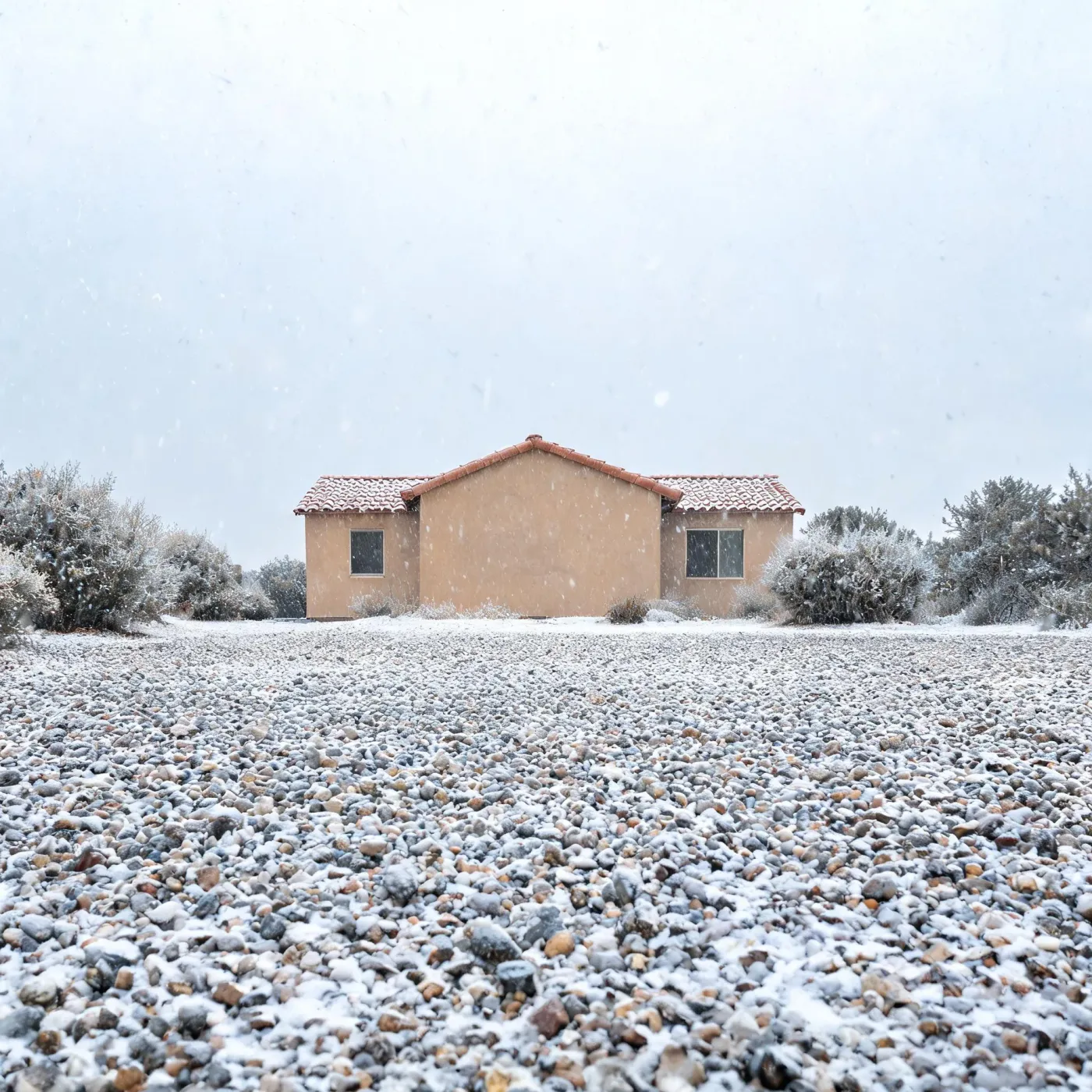
A single-story tan stucco house with a red tile roof stands behind a wide gravel yard dusted with snow, flanked by low shrubs, under a pale overcast sky with falling snowflakes.

Winter nights average 33°F across the state, which means that cold isn't a hard freeze most nights, it's a temperature the furnace can sit right on the edge of. Instead of firing once and running steady for hours, it cycles on and off all night, chasing a thermostat setting that's only a few degrees above outside air. Every one of those startups pushes air past whatever's loose in the cabinet, so a rattle that might show up once an hour in a colder state shows up far more often here. Source: National Weather Service winter averages.

NOAA nClimDiv 1991-2020 county normals weighted by homes

A gray gas furnace stands on a concrete basement floor, connected to sheet-metal ductwork, white PVC vent pipes, and a yellow gas line, with plastic sheeting covering the walls.
A furnace like this, newly installed with tight ductwork and clean connections, starts the season with no loose parts to shake.
A metal furnace with louvered panels stands against a concrete basement wall, connected to sheet-metal ductwork and a round flue pipe, with wooden framing posts and a pipe nearby.
A furnace that's sat through years of dust and use, like this one, is where a worn blower wheel or a bolt finally lets go.

A rattle that shows up when the burners fire and fades once the blower gets going is a loose panel or a bolt that's worked free, not a sign the furnace is failing you. One that holds through the whole cycle is the blower wheel or the motor mount, and that's worth having looked at before the coldest nights of the year put more strain on it. Either way, someone who services furnaces in Nevada all winter has seen this exact rattle more times than you have, and knows which of the two it is before the panel even comes off. You'd be handed to one licensed contractor working near you, not a handful of companies calling back at once, so you explain the sound once and the next conversation is about fixing it. The furnace itself still needs a hand on it. Finding that hand is the part that stops here.

Kitchen corner with cream upper cabinets, oak lower cabinets, white marble-look countertop, beige tile backsplash, a ceramic vase of greenery, a wooden cutting board and bowl, and a black-framed window at right.
Interior corner of a room with a white-framed window and wide sill, beige walls with panel molding, a wooden cabinet holding a ceramic vase with a green leafy plant, and blurred shrubs and trees outside.
A wood-framed armchair with beige cushions and a woven lumbar pillow sits in a corner beside a large window overlooking green trees, with a tall ceramic vase holding leafy branches on the left and plaster walls and wood flooring.
Interior corner with a white-framed window above a sill, beige walls with baseboard molding, a greige shaker-style cabinet with brass knobs and a potted plant on top, light wood flooring and a woven jute rug.
A dark-framed six-pane window with white trim and sill set in gray horizontal lap siding, with hydrangea shrubs below and a white column and shingled roof section at left.

One form, no calling around

The pro who reaches out is licensed in Nevada.

Answer a few questions

Asking costs nothing, and the choice to hire stays yours.