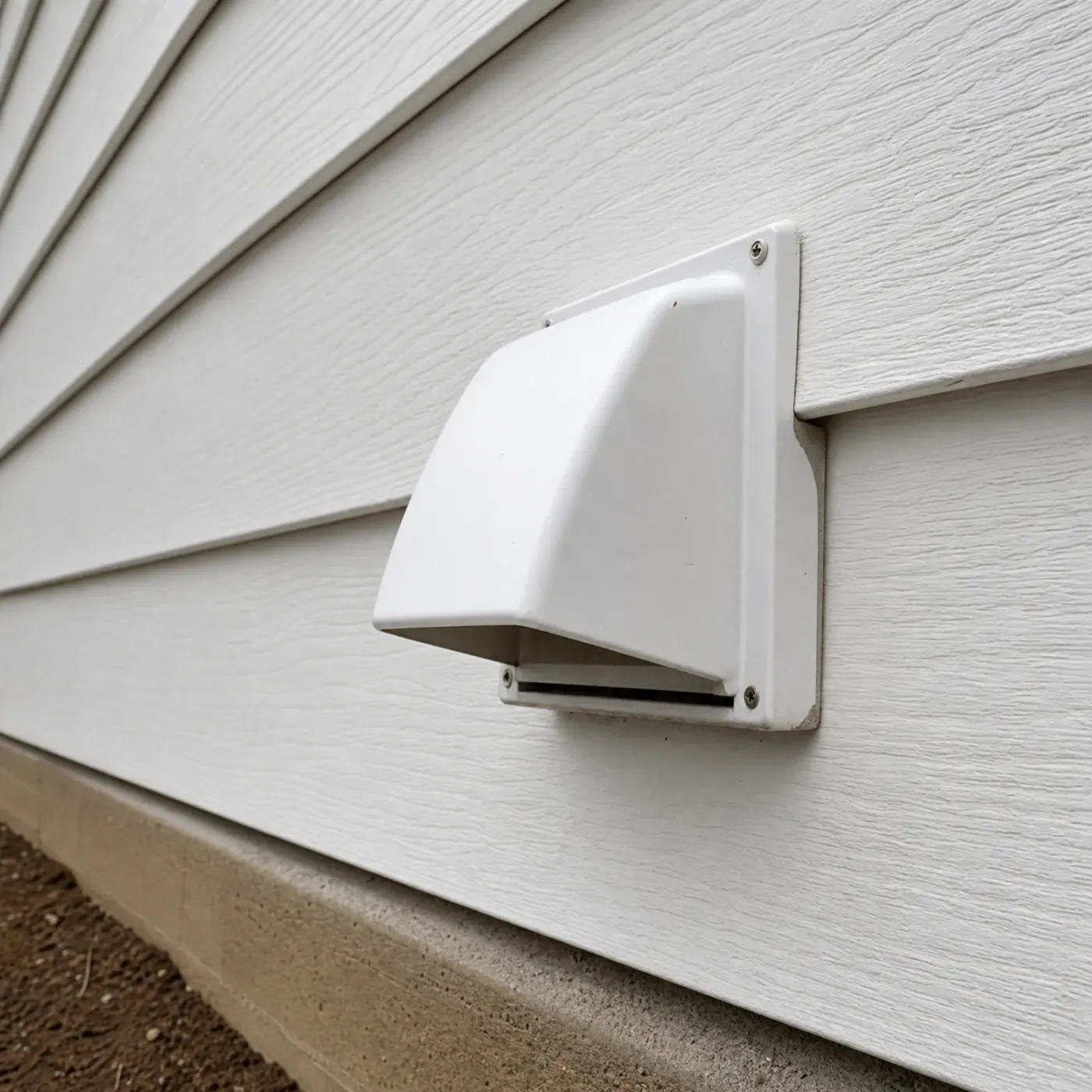
The vent cap sits open and clean
Air moves freely through this cap, so the hot, wet air from the dryer gets outside where it belongs. The duct behind it isn't fighting a buildup of lint, so the dryer runs its cycle once and stops.
 Get a dryer vent pro
A local pro who cleans dryer vents gets in touch with you.
Nevada summers push triple digits for months, and a laundry room with a struggling dryer vent turns into the hottest room in the house. Run a load in July and the heat has nowhere to go but back into that small space, along with the moisture that's supposed to be leaving through the vent.
A dryer that's venting properly pushes hot, damp air outside through the duct and out the vent hood. When lint has built up along the way, that air backs up instead. It spills out around the door, off the back of the machine, through the vent itself. In a Nevada summer, that extra heat lands on top of a room that's already working against the outdoor temperature.
Power here is cheap, so most people aren't watching the dryer's electric use. But a gas dryer fighting a blocked vent runs longer to finish a load, and it's pushing more heat and gas exhaust into the room the whole time it runs.
This is a cleaning job, not a repair, and it's one most homeowners don't think to schedule until the laundry room is unbearable. The duct run, the vent hood outside, the lint trapped in bends and joints along the way, all of it matters more in a Nevada summer than people expect.
A local contractor who works on dryer vents in this heat knows which vent hoods clog first in dry, dusty air and how long a duct run typically goes before lint builds up enough to matter. Answer a few questions about your setup and your request goes to one licensed Nevada contractor, not a handful of companies competing for the job. That contractor will reach out to talk through what your laundry room needs.
Your laundry room gets hot because the dryer isn't actually pushing its heat outside. Every load it runs puts out hot, wet air, and that air is supposed to travel through the vent and out of the house. When the vent is clogged with lint or crushed somewhere behind the wall, that hot air backs up and spills into the room instead. In Nevada, the outside air is already near or above 100 in summer, so the vent has less pull to begin with, and a blocked one makes it worse fast. A gas dryer adds to this, since the burner itself puts off heat on top of what the exhaust carries. Once the vent is clean and running clear, the heat and moisture leave with the air instead of building up around you while you fold laundry.


Your dryer vent cleaning request goes to one local pro.
Your dryer vent cleaning request goes to a local pro who does this work.
It costs nothing to send, and you don't have to hire anyone.






That cheap power won't save you much if a clogged vent makes the dryer run two or three cycles to finish one load. Each extra cycle is more heat pumped into a room that already can't vent it out. A clean vent means fewer cycles and less heat stuck in there with you.
EIA-861 2025 statewide residential average
A dryer vent is only a few inches across, so it doesn't take much lint to choke it down. As the lint builds along the duct walls, the path left for air gets narrower, and the blower has to work against more resistance to push the same air through. Less air moves, but the dryer keeps putting out the same heat and moisture every load. With nowhere to go, that heat backs up into the duct and into the laundry room itself. The hood flap on the outside is a good place to check. If it barely opens when the dryer is running, the air isn't getting out.
You'd think Nevada's dry air would help a dryer vent along, but it doesn't change how lint builds up inside the duct. Lint collects from the clothes, not from the air outside, so a dry climate doesn't slow it down. What dry air does change is how fast a hot laundry room feels uncomfortable, since there's no humidity outside to compare it to. A clogged vent in a Nevada summer traps heat in a room that's already working against triple-digit afternoons. Getting the duct cleared out is what brings the airflow back, not anything about the air outside the house.



Air moves freely through this cap, so the hot, wet air from the dryer gets outside where it belongs. The duct behind it isn't fighting a buildup of lint, so the dryer runs its cycle once and stops.

This cap barely opens because lint has built up at the exit point and probably further back in the duct too. The air backs up with nowhere to go, and the dryer keeps running hot while the laundry room holds onto that heat.

The heat in that room is coming from air that should already be outside. Once the duct is clear, the dryer pushes its heat and moisture out in one pass, and the room stops holding onto it load after load.
Nevada heat will always make that room warmer than the rest of the house in summer. What doesn't have to happen is a dryer fighting a blocked vent on top of it. A local contractor who works on vents through the hot months knows what kind of runs and bends tend to pack with lint first, and where your line is likely catching. You'd be matched with one contractor who services this equipment, not a handful of companies competing for the job.


The pro who reaches out is licensed in Nevada.