


How often to clean air ducts in Nevada

One request and the duct cleaning stops waiting on you.

I'm done searching

Most homes in Nevada do fine with duct cleaning every 2 to 3 years. The dry air here keeps mold out of ductwork, which is the main reason it would need to happen sooner elsewhere. What fills ducts in Nevada is dust, fine and dry, pulled in from outside and from attic space, and it settles in the duct runs between cleanings. Homes near construction or with pets tend to build up faster and may need it closer to every year. Since most homes here heat with gas, the furnace blower is pushing air through those same ducts all winter, so the dust gets circulated through the house rather than staying put. Check your filter between cleanings. If it's loading up fast, dust is building up in the ducts faster than the 2 to 3 year mark too, and it's worth moving the cleaning up.

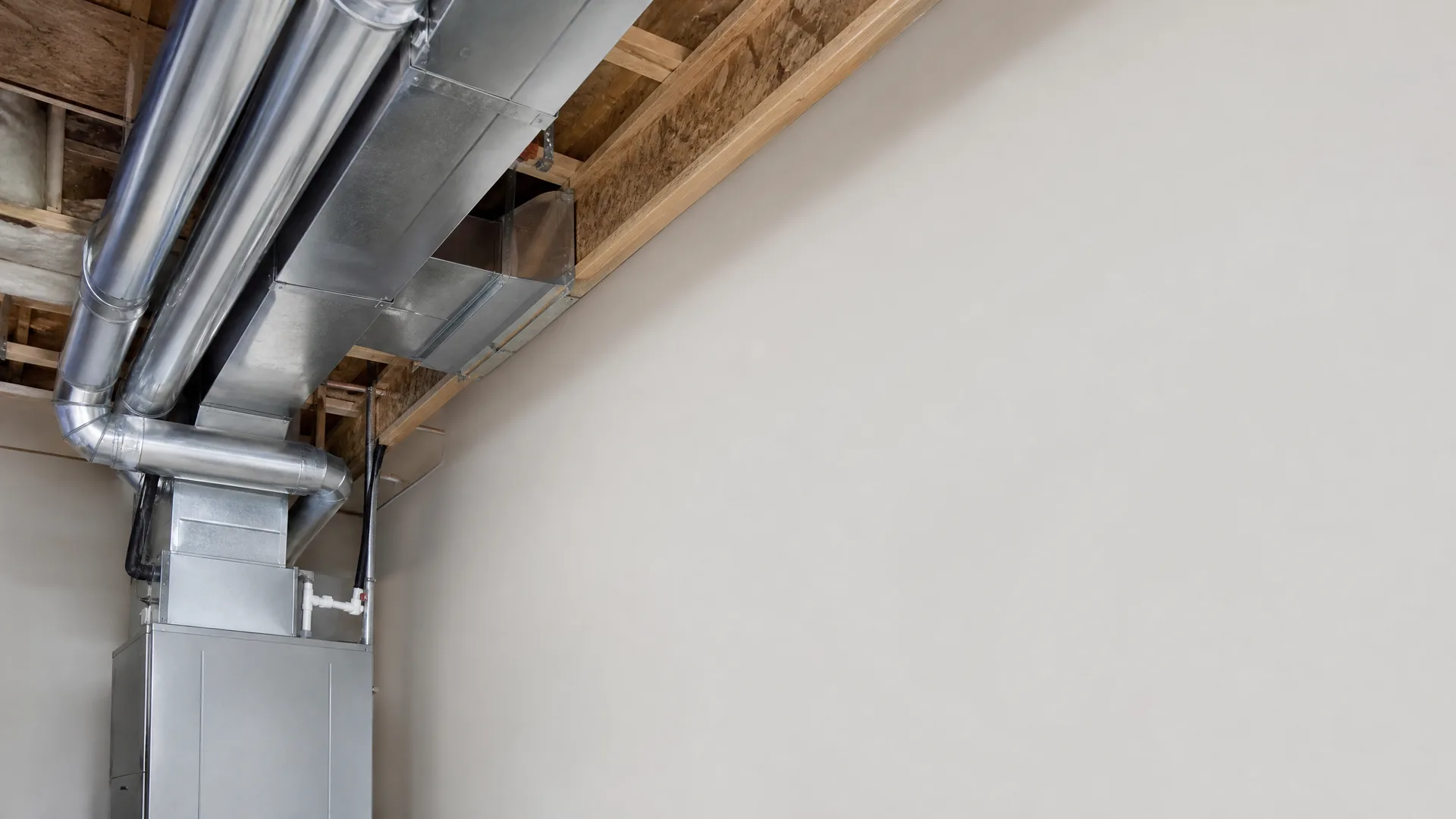
Galvanized sheet-metal ductwork and round pipes running along an exposed wood-joist ceiling with insulation, above a furnace unit beside a blank painted wall.

Why dry heat changes the schedule

Mold needs moisture, and Nevada doesn't have it. That's the problem duct cleaning solves fast in humid states, and it's mostly off the table here. What builds up instead is dust. Dry desert air carries fine particles that work through the return and settle along the duct walls. It takes longer to pile up into a problem than wet grime does, which is why the 2 to 3 year window holds for most homes.

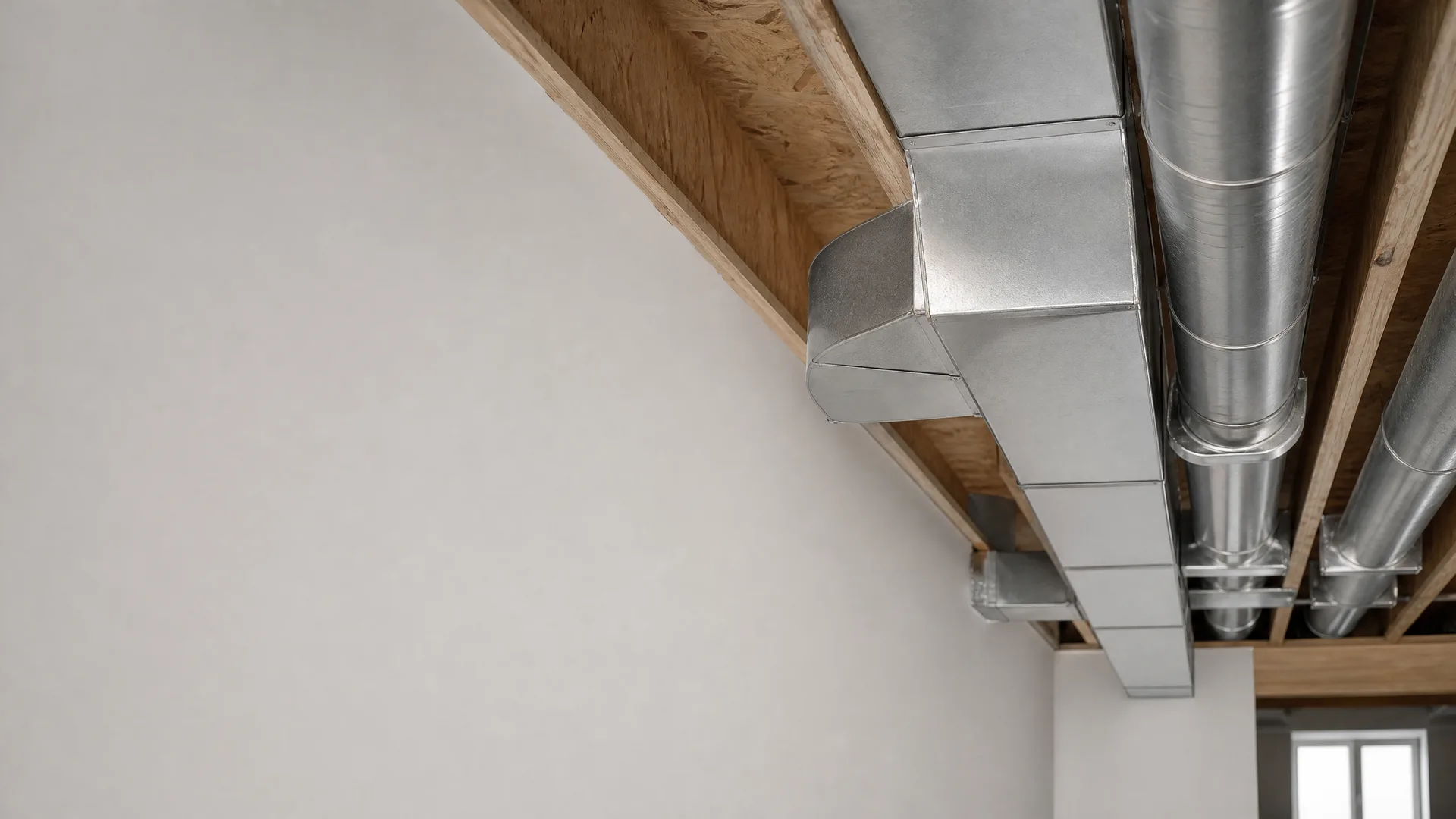
Galvanized rectangular and round sheet-metal ductwork mounted beneath an exposed wooden joist and OSB ceiling, next to a plain white wall and a window at lower right.

How a gas furnace factors in

A gas furnace pulls return air across the same ducts a central AC uses, so the dust moving through the system doesn't let up once summer ends. Running the blower nine or ten months between the two keeps air moving through the ductwork most of the year. The more the blower runs, the more dust gets pulled through and settled along the duct walls, which is part of what sets the pace for cleaning here.

Does dust from a swamp cooler make duct cleaning more important?

A lot of homes in the drier parts of Nevada run a swamp cooler instead of or alongside central AC. It pulls in outside air and pushes it through a wet pad, and you may wonder if that changes how often the ducts need attention compared to a straight AC setup.

Yes, swamp coolers add moisture to the dust, so check ducts a little sooner

A swamp cooler works by pulling outside air through a wet pad, which means some of that moisture rides along into the ducts with the dust already in there. Dry dust alone just sits. Dust with a little dampness in it is more likely to cling to the inside of the ductwork instead of blowing through. If your home runs a swamp cooler through the summer, it's worth having the ducts checked at the front end of the 2 to 3 year range rather than the back end. A gas furnace running the rest of the year dries things back out, but the buildup from summer is already there by then.

A basement with a gray furnace on a concrete pad connected to large sheet-metal ducts running along an exposed wood joist ceiling, with PVC pipes and plastic sheeting on the walls.

Ductwork running clean

This is what a duct system looks like when it's keeping up. Air moves through the plenum and out through the runs overhead without fighting a layer of dust packed against the metal. Registers push out the full airflow your furnace is putting out, and nothing in the system is working harder than it needs to.


Galvanized sheet metal HVAC ductwork with a vent grille running along a wooden joist ceiling above a bare concrete wall.

Dust building up inside

Dust collects along the inside of the duct walls, especially in the long runs over a basement or crawlspace like this one. You won't see it from below. What you'll notice is a register that puts out less air than the others, or a fine layer of dust settling again days after you've cleaned a room.

An unfinished basement with bare concrete walls and floor, showing exposed wooden floor joists, pipes, wiring, and metal HVAC ducts with a vent grille overhead.
Before you get your ductwork cleaning
Unfinished basement with galvanized sheet-metal rectangular and round ductwork running along a wood-joist ceiling, two steel support columns, a small window, and a furnace unit against the far right wall.
After you get your ductwork cleaning

Let someone else find the pro

Your duct cleaning request goes to one local pro.

No fee to send it, and nothing to sign.

What a dusty duct does to your house

You'll see it before you think to check the ducts. A film on the shelves a day or two after dusting, dust coming back fast on dark furniture, a register that blows a puff of dust when the furnace kicks on. Run your finger inside a supply register and dust packed on the duct behind it is doing the same thing to every run in the system. The furnace moves that air through the whole house, so what's sitting in the ducts ends up on your floors and your filter works harder to catch what's getting past it.

What it costs you to wait

A duct lined with dust is a narrower duct, and your furnace blower pushes harder to move the same air through it. Power here is cheap, so that extra runtime shows up less on your bill than it would elsewhere, but the furnace still logs the hours. Dust against metal also feeds whatever's circulating back into your bedrooms and the living room, which matters more if anyone in the house has allergies or asthma. None of this is sudden. It builds across a few years, which is why the 2 to 3 year schedule catches it before it's a bigger job.

A bearded man in a navy T-shirt sits on a light-colored couch indoors, smiling while looking down at a laptop screen in the foreground, with a framed picture and a potted plant blurred behind him.
A bearded man in a plaid flannel shirt sits indoors looking out a window at snow-covered trees, with a steaming mug on the sill and wooden kitchen shelves behind him.

A house kept closed up with the AC running all summer traps dust in the ducts instead of letting it settle out. Three years of that is a lot of buildup.

A house with a swamp cooler or one that gets aired out regularly pulls in more dust from outside to begin with. That can mean leaning toward 2 years instead of 3.

Power costs 13.26 cents per kilowatt-hour statewide

At 13.26 cents a kilowatt-hour, running your blower through ducts packed with dust costs more than it should. A clean system lets your furnace and AC move air without fighting that buildup, so you're not paying to push air through a clogged line.

EIA-861 2025 statewide residential average

Your Nevada duct cleaning schedule

  • Every 2 to 3 years covers most Nevada homes, since dry air keeps mold from forcing an earlier schedule.
  • Dust, not mold, is what builds up in Nevada ductwork, pulled in from outside and packed against the metal over time.
  • A swamp cooler pulling in outside air can shorten that window since it adds more dust than central AC alone.
  • A house run closed up all summer traps dust in the ducts instead of letting it settle out elsewhere.
  • Dust on shelves a day after cleaning or a register that puffs dust on startup both point to ducts due for a look.
  • A clogged duct system makes your furnace and AC work harder to move the same air, which shows up on the power bill.

Two to three years is the answer for most houses in Nevada, and dry air is why. Mold is what shortens that window in other states, and it needs moisture this climate doesn't have. What you're dealing with instead is dust, fine and dry, worked into the ductwork by every cycle of the blower. How fast it builds up depends on your house. A swamp cooler pulls in outside air all day, so it adds dust faster than a central AC system does. A house kept shut tight with the AC running traps that dust in the ducts instead of letting it settle somewhere you can sweep it. Both push you toward the front of that two to three year window rather than the back of it.

You don't need to guess at the calendar to know when it's time. Dust back on a shelf a day after you've wiped it down, a register that puffs out dust when the furnace first kicks on, these are the system telling you before a date on a schedule would. Catching it at that point is what keeps a small buildup from turning into a clogged system. And a clogged system costs you twice, once in the dust moving through your house and again on the power bill, since a furnace or AC working to push air through packed ductwork uses more power to move the same air. Checking your ducts against what you're seeing, not just the years since the last cleaning, is what keeps the problem small.

A smiling man in a dark green sweater sits at a wooden table with a light gray mug in a kitchen with white tile backsplash, pendant lights, and an adjoining living room visible.
A smiling man in a dark gray sweater stands indoors looking to the side, with a kitchen counter holding a ceramic mug and open wooden shelves behind him and a living area in the background.
A smiling man in a dark blue button-up shirt stands at a white kitchen island, with open shelving, a gas range, a potted plant and a window in the background.
A smiling man with dark wavy hair and a beard, wearing a dark green knit sweater, sits in an open-plan living room and kitchen with a brown sofa, large windows, and a counter holding a mug and a wooden bowl.

Ductwork Cleaning

One request and it's handed off

Your request goes to one pro, not a list of companies.

A black-framed smartphone standing upright against a plain light gray background, its screen filled with solid green.
Duct and vent cleaningDucts or ventsNevada
Step 1 of 2

What ZIP code is the job in?








