Mini Split Installation in Crescent Valley, NV
A new system here will heat from September through June and cool from July through August every year. Tell us about the house, and a licensed contractor who covers Eureka County will get in touch.
Tell us about the job
It takes about a minute.
A mini-split here works nearly year-round
Crescent Valley needs heat from September through June and cooling in July and August. That is ten months of the year the system is running one way or the other, with only two months it gets to rest. Winter nights average 18°F, cold enough that the heat pump side is doing real work, not just topping off some other source of heat.
A new mini-split has to be sized for both ends of that range, the 18°F nights and the 84°F afternoons. Any unit manufactured now has to clear 14.3 SEER2 for cooling and 7.5 HSPF2 for heating. That is the federal floor, not a feature to shop for. Nevada saw 13% of households go at least a day without power in 2024, and a mini-split that loses power comes back on by itself once it's restored, same as it would after any other interruption.
- 10 months
- September through June, your system heats
- 2 months
- July through August, it cools
- 18°F
- the average winter night it heats against
- 84°F
- the average summer afternoon it cools against
NOAA nClimDiv, 1991–2020 normals
Nevada requires HVAC contractors to hold a state license.
The Nevada State Contractors Board issues that license to the contractor's business, not to this one job, so it covers the contractor across every installation they take on, not just yours. The board keeps that license on record, which is what separates a licensed contractor from someone working without one.
For a mini-split, the license is who is allowed to do the work. Whether the unit ends up mounted and wired correctly is a separate matter, and that falls to the local building office. Most cities and counties in Nevada require a permit before a mini-split goes in, and an inspection once it's mounted and running. That inspection is what checks the mounting, the wiring, the line set. The state license does not cover that part.
Sources: Nevada Legislature · Nevada State Contractors Board
- Is a mini split worth it?
- For most homes here, yes, since some form of heat or cooling is needed all 12 months of the year. A mini split handles both from one system, which matters when winter lows average 18°F and summer afternoons run around 84°F. It also gives you room by room control, so you are not heating or cooling space nobody is using. A contractor can look at your house and tell you what size and how many zones make sense.
- How many rooms can a mini split cover?
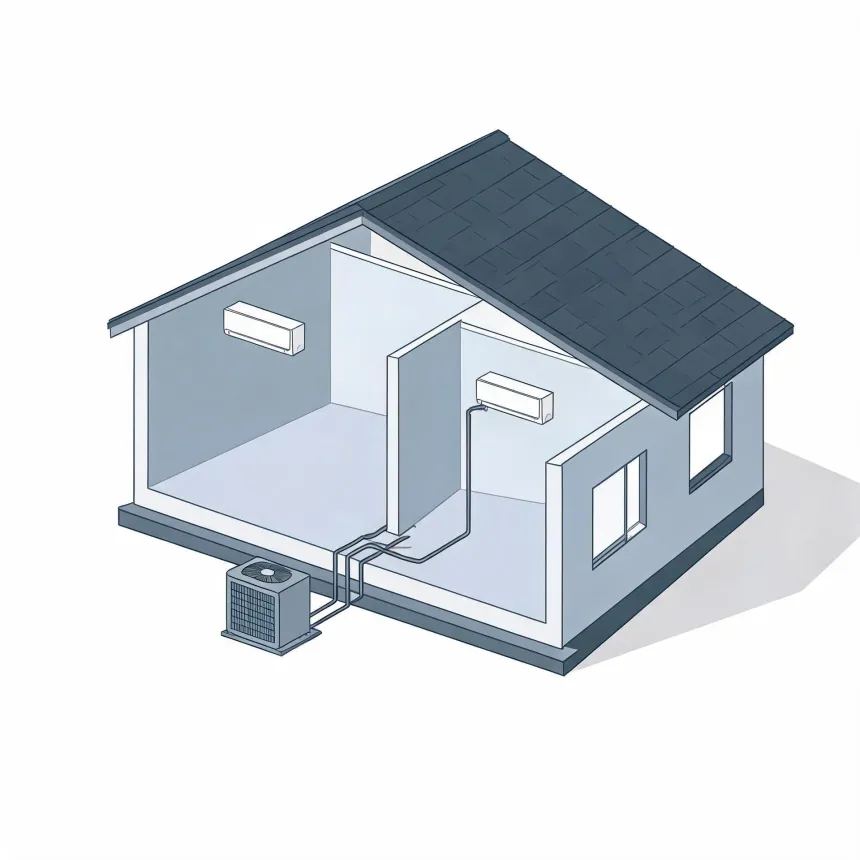
- It depends on how many indoor heads the outdoor unit runs. A single-zone system covers one room or open area, and a multi-zone system adds more indoor heads to cover more rooms from that same outdoor unit. Each head is sized for the space it serves, so the right count comes down to the square footage and layout of your house. A contractor needs to walk through the house to say what fits.
- Can a mini split heat a whole house?
- It can, if it is sized and placed to cover every room you want heated. A multi-zone system with enough indoor heads can take the place of a furnace, and that matters here since homes need heat from September through June. Whether it works comes down to the layout of the house and whether the system is rated to keep up on your coldest nights, when lows here average 18°F. A contractor can size it against that and confirm it will hold up.