

Ducts doing their job
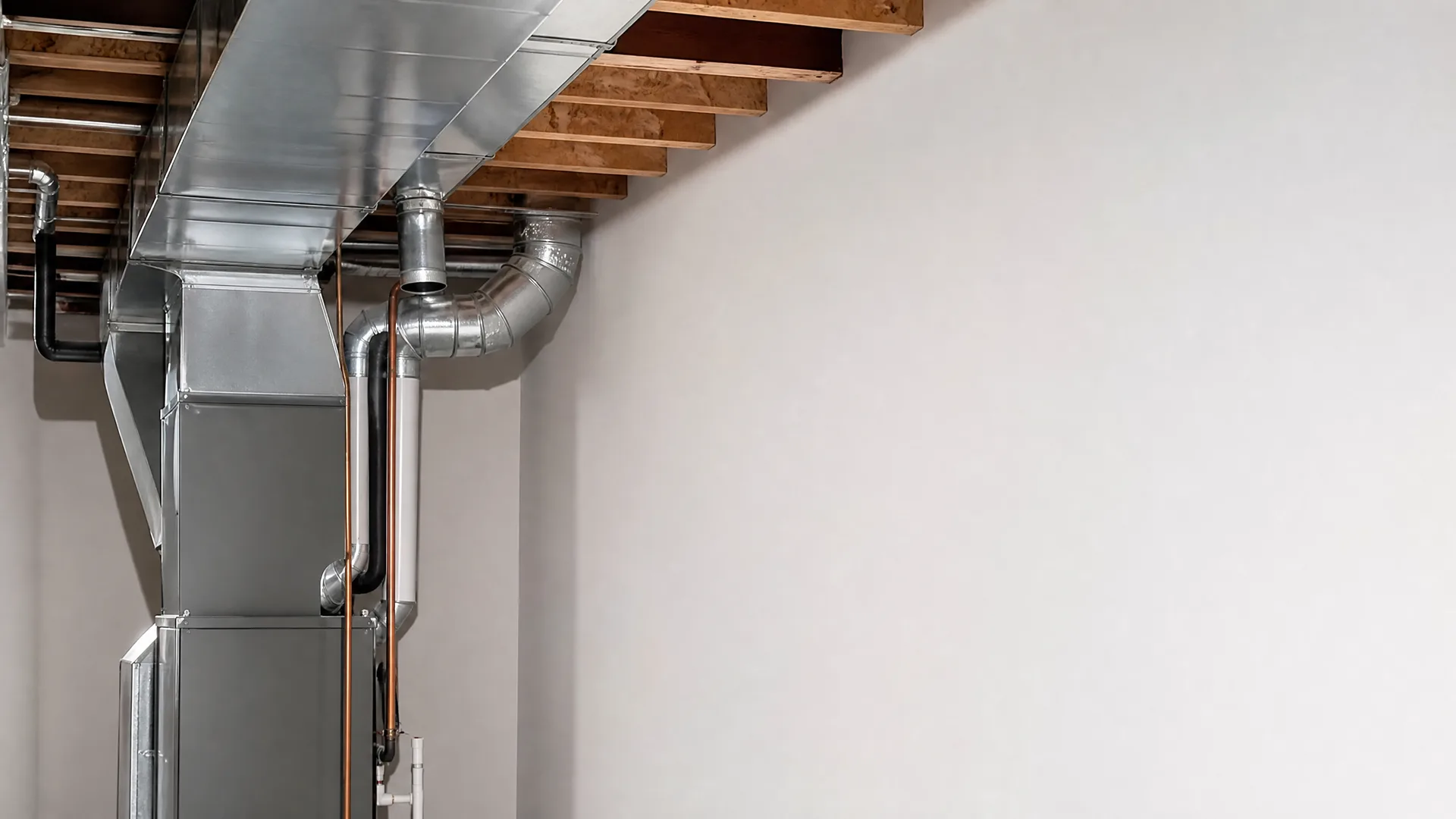
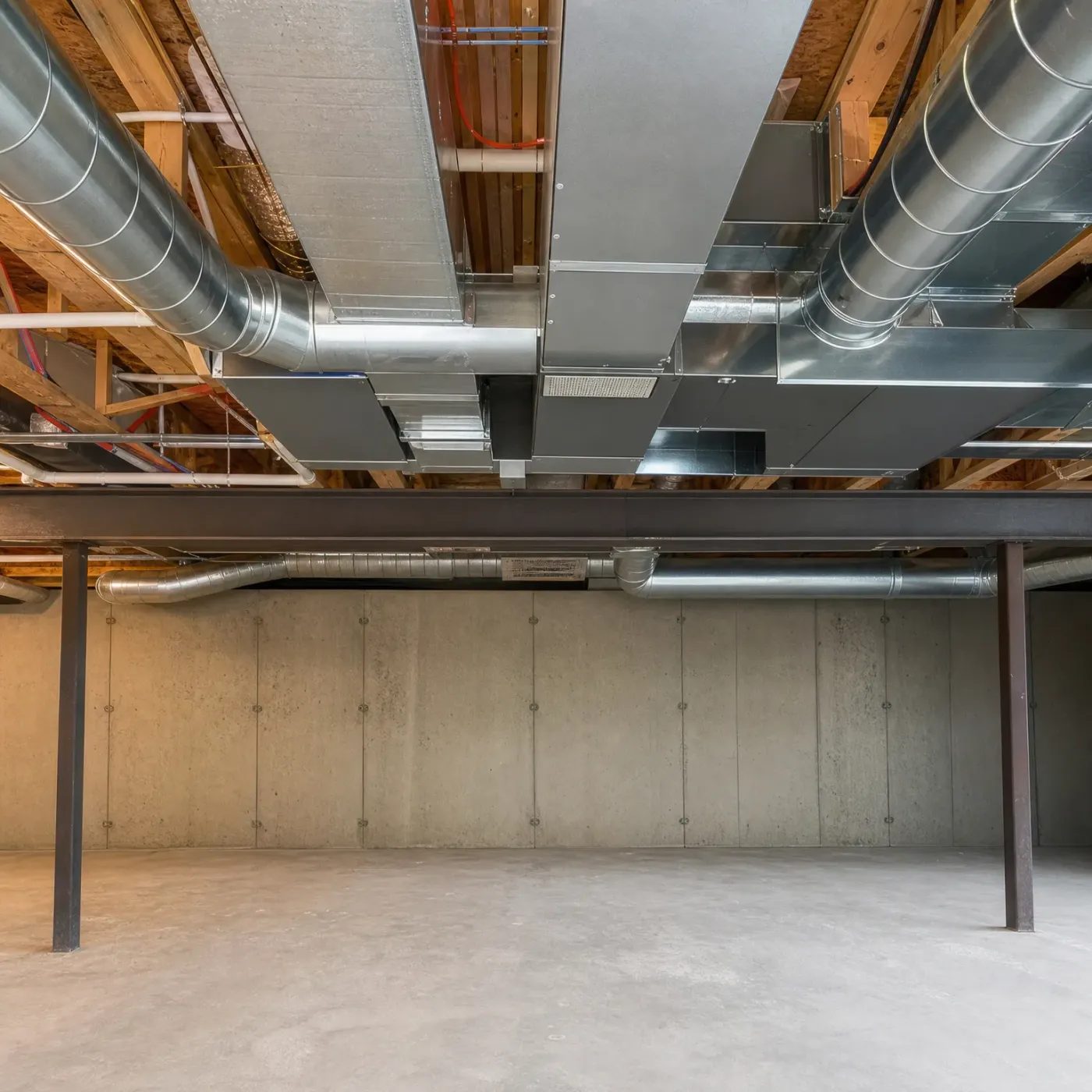
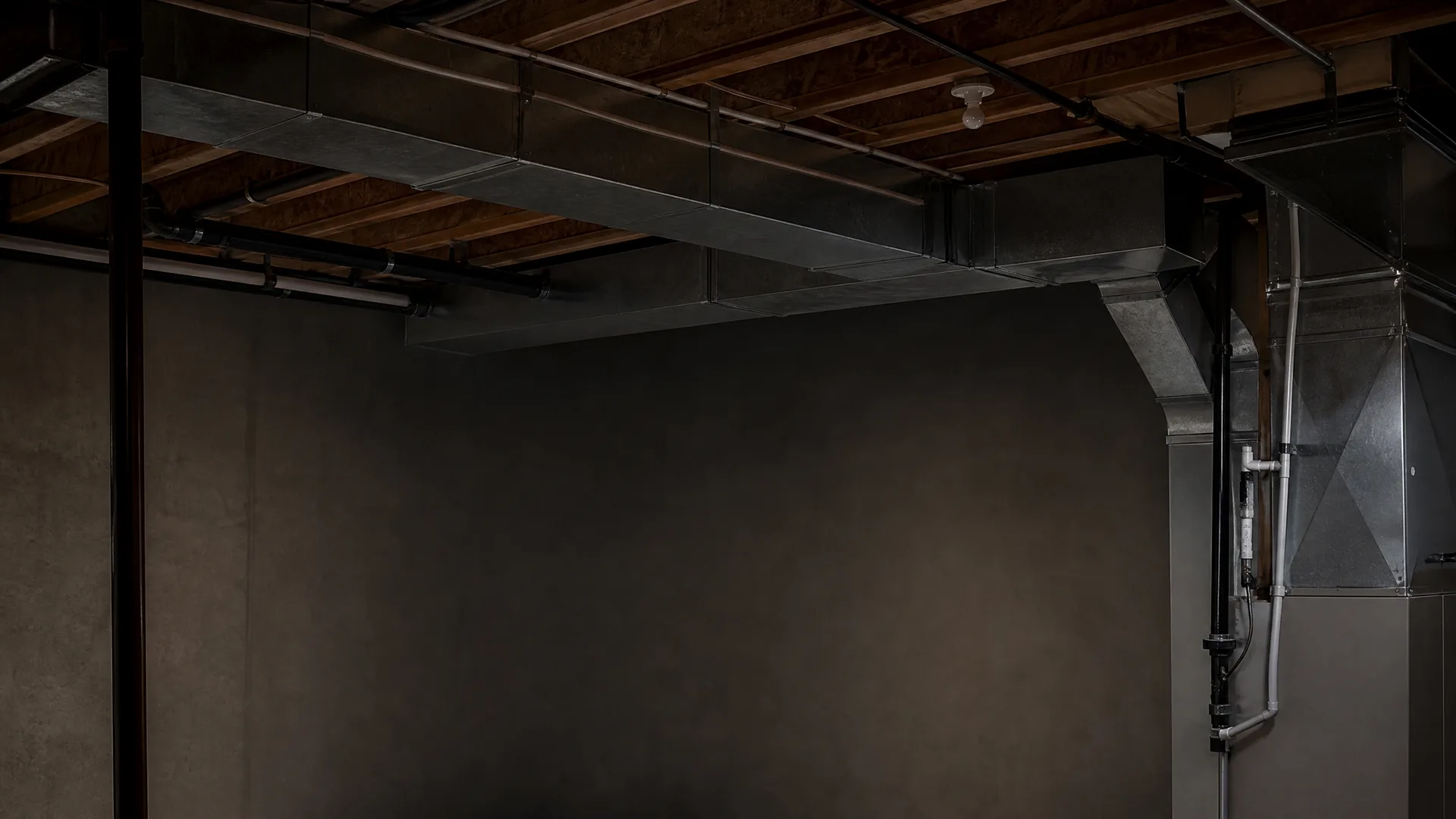
This is what a clean duct system looks like from the basement: sheet metal running tight and dry overhead, no staining on the joists, no smell when you walk under it. Air moves through without picking up anything it shouldn't.
A local pro who cleans ducts gets in touch with you.
Match me with a proNevada air is dry most of the year, so you don't expect mold to be a duct problem here the way it might be somewhere humid. But a musty smell when the AC kicks on, or dark specks around a vent cover, makes you wonder if something is growing where you can't see it. You want to know what to actually look for before you call anyone.
The clearest sign is smell: a musty odor that shows up when the air handler runs and fades when it shuts off. Look at the supply and return vent covers too. Dark specks or a fuzzy gray or black patch around the grille means moisture got in somewhere, usually from condensation on the AC coil or a duct run that sits in a cool crawlspace. Dust that settles again within a day or two of cleaning, or a rise in sneezing and stuffiness right after the AC comes on, points the same direction. Dry summers here mean mold is less likely to spread through the whole system, but air conditioning cools and pulls moisture out of the air it touches, and that moisture collects somewhere. Any duct section that stays damp is where it takes hold.
Dry desert air doesn't stop mold inside ducts, because the air inside the ductwork isn't dry desert air. Condensation forms on the evaporator coil every time the AC runs, and that moisture sits in the duct system near the coil and the drain pan. Run the AC hard enough through a Nevada summer and that damp spot never fully dries between cycles, which is all mold needs, regardless of how little rain falls outside.

Pull a vent cover and look at the metal around the opening. Mold tends to show as black or dark green specks, sometimes a fuzzy gray patch, usually clustered right at the edge where air blows across it. Check the ones nearest the air handler first, since that's closest to the coil and the most likely spot for moisture to collect. A flashlight and a few minutes at two or three vents will tell you more than guessing by smell alone.

This is what a clean duct system looks like from the basement: sheet metal running tight and dry overhead, no staining on the joists, no smell when you walk under it. Air moves through without picking up anything it shouldn't.

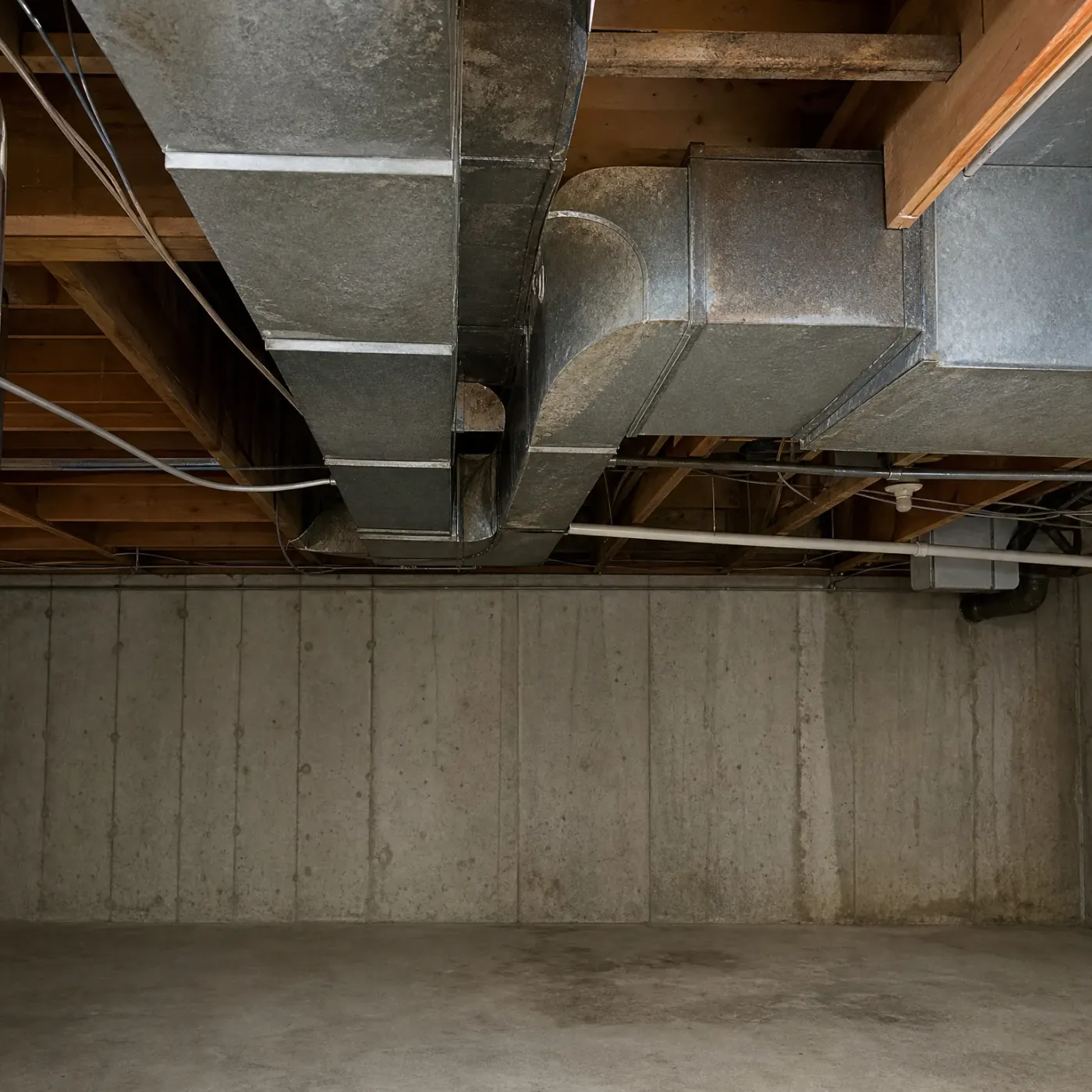
Here the ductwork shares the ceiling with wiring and flex duct in a tighter run, more joints and seams where moisture can sit. If one of those sections stays damp near the coil, that's where a musty smell starts and spreads through the vents.




Warm moist air hits the evaporator coil and cools fast.
Water condenses on the coil and drips into the drain pan.
Damp air lingers in the duct nearest the coil.
Dust in that damp duct gives mold spores something to feed on.


Once you've caught the smell or seen the specks, the next question is who you trust to go in and deal with it right. That means someone who knows duct systems in Nevada homes, where the coil stays damp from AC running most of the day and the rest of the house stays bone dry, and who can tell you honestly whether what you're seeing is mold or just dust. Finding that person usually means searching around, calling a few companies, describing the smell and the specks over and over, then trying to compare quotes that are never quite for the same thing. Handing that off means you explain it once, to one contractor who takes it from there. If the smell only shows up when the AC runs, or you've found dark specks near a vent, that's worth sorting out before it spreads further through the system or into the air you're breathing all summer.
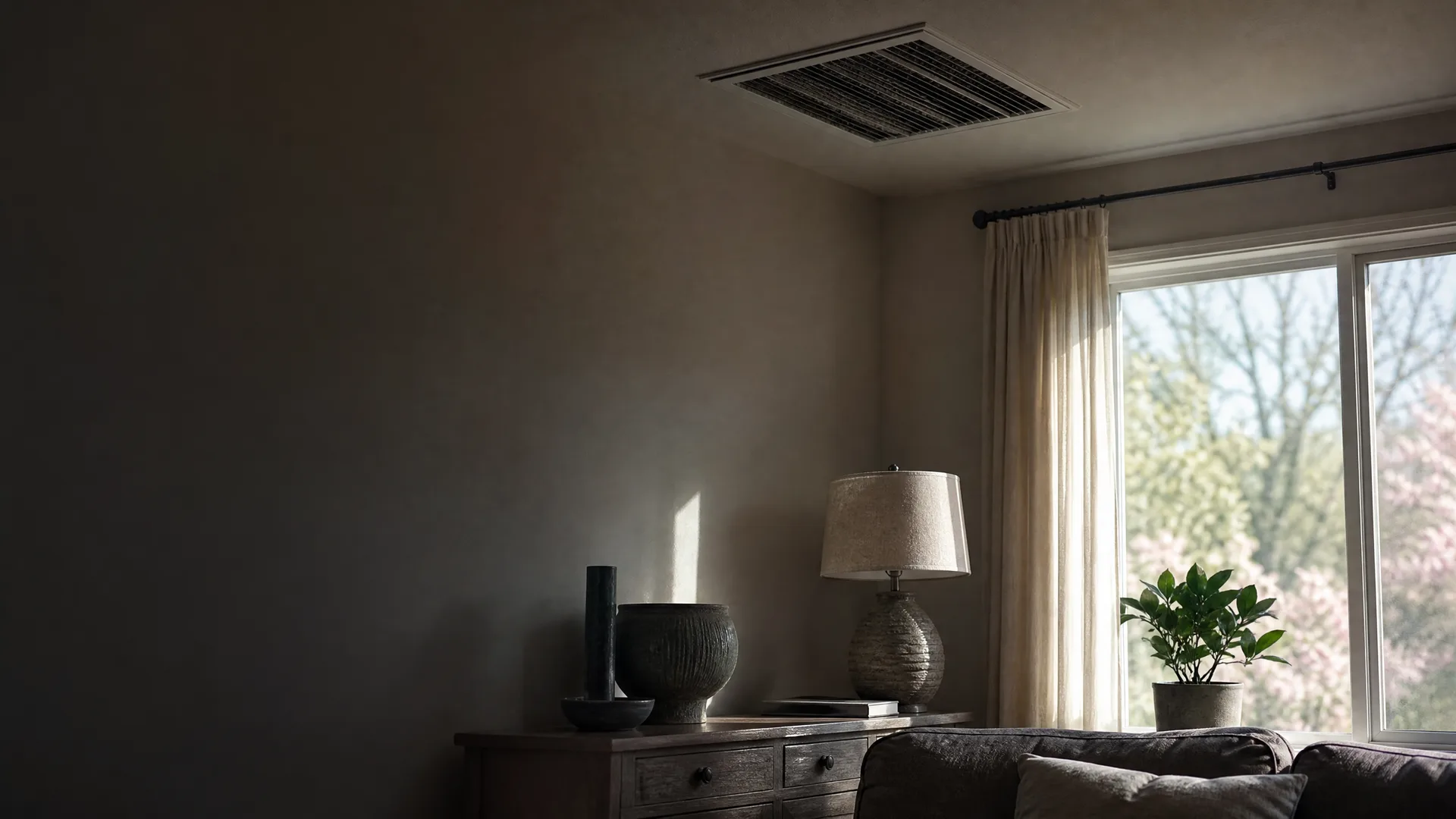
It's a Saturday afternoon in April, warm enough that the AC has been cycling since morning. You're sitting in the living room when the sun cuts across the ceiling and catches the vent grille at an angle. There's a gray ring of dust around the slats, thicker than you remembered, and a faint line of it has settled on the bookshelf underneath. You get up to look closer and notice the dust isn't just sitting on top of the grille, it's packed into the slats themselves. The AC clicks on again, and for a second you catch that musty smell before the air mixes into the room.
At 13.26 cents a kilowatt-hour, running the AC long enough to catch mold early doesn't cost much. There's little reason to put off a fan running longer or a thermostat set a degree or two lower while you sort out what's growing in the ducts near that coil.
EIA-861 2025 statewide residential average


A musty smell when the AC starts, or dark specks ringing a vent cover, means mold has a foothold near the evaporator coil, somewhere in that duct run. Nevada's dry air outside doesn't change what happens inside the ductwork once the coil starts condensing, and that's true whether the house is new or decades old. You've seen what the other side looks like too. Dry metal, no staining on the joists, no smell when the system cycles. That's the standard to check your own ducts against, not a guess about what's normal for a house like yours. None of this is urgent in a way that should make you panic, and running the AC a little longer or the fan a little lower while you figure out next steps isn't going to show up on the power bill in any way worth worrying about. What takes the real time isn't the fix, it's getting to someone who'll look at the coil and the duct run and tell you honestly what's there. That usually means a handful of calls, describing the same musty smell and the same specks to each one, then sitting with quotes that don't line up because nobody saw the same thing. Getting matched with a contractor who already knows how Nevada coils behave skips that part. You've matched the signs to the cause. What's left is deciding who goes in and clears it out.
Explain the job once and skip repeating it on every call.